.png "Interior")
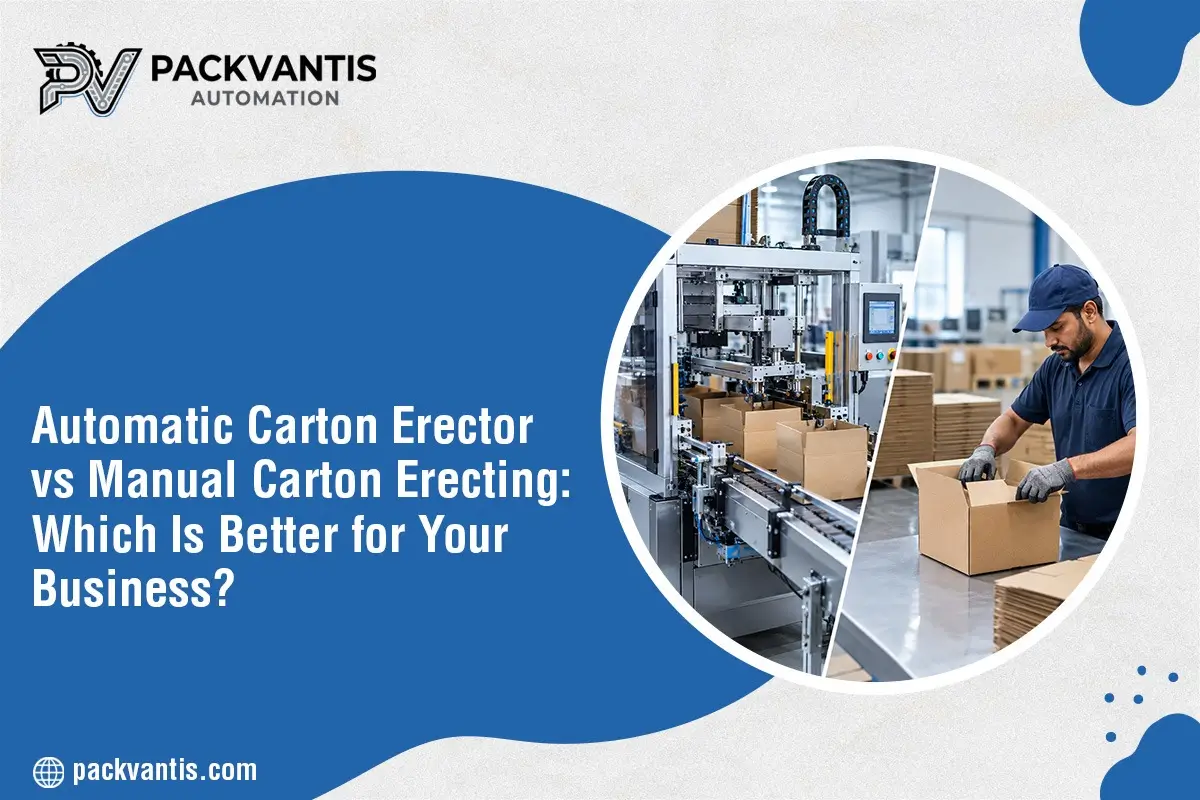
Every box that leaves your plant was folded by somebody or something. When you’re packing a small batch, a person with a roll of tape is fine. The trouble comes as numbers climb. Boxes get slower, they stop looking alike, and the people folding them are tired by lunchtime.
So the real question isn’t whether automation is “better”. It’s whether it’s better for the volumes you’re running right now, and the ones you expect next year. At Packvantis Automation, we get asked this a lot, so let’s go through it honestly.
How Manual Carton Erecting Works
A worker takes a flat carton, pops it open, folds the bottom and tapes it shut. Then it goes down the line to be filled. A few hundred of those a shift is manageable. A few thousand and you need a small team doing nothing but boxes.
Manual erecting costs almost nothing to start. There’s no machine to buy, no floor space to give up, and a new carton size needs no setup. That flexibility is real, and it’s why many small units stick with it for years.
The trouble is the repetition. Everyone folds a little differently, and by late in the shift the taping gets sloppy. One bad box can jam the line further down, and usually nobody spots it until it does.
How an Automatic Carton Erector Works
A machine pulls a flat carton off a magazine, opens it, folds the flaps and seals the bottom in a single cycle, then sends it on to the filling station. It repeats the exact same movement at a set speed, so the boxes come out identical.
When you’re shopping for an automatic carton erector machine supplier in India, ask for a demo with your own cartons. Brochure speeds come from ideal boxes. Yours might be thicker, taller or just awkward.
1. Speed and Consistency
This is where the gap is widest. People work at a human pace, and it drops as the shift goes on. A machine holds its speed from the first carton to the last, so the stations after it don’t stand around waiting for boxes.
Consistency matters just as much. Machine-formed cartons come out square, evenly sealed and the same size, so they stack better on a pallet and hold up better in transit. Hand-formed ones vary, and that variation turns up later as crushed corners and seals that give way.
2. Labour and Safety
Forming boxes is dull, repetitive work, and repetitive work is where strain injuries and errors creep in. If three people spend their whole shift folding cartons, that’s three people not checking quality, restocking materials or running the rest of the line.
With a machine, one operator loads flat cartons and watches the output. You aren’t cutting people out of the process. You’re moving them to work that actually needs a person.
3. The Cost Question
Here’s the honest part. An automatic erector is a real investment, and for a low-volume unit it can take a long time to pay back. Stay manual if your volumes are small, your carton sizes change every day or the line only runs a few hours a week.
But look beyond the price tag. Add up the wages of the people forming boxes, the rework from badly sealed cartons and the delays when the filling line waits. Over a year or two, that often outweighs the machine’s cost for a plant running steady volumes.
If you’re comparing options, a carton erecting machine manufacturer in India should be able to show you running costs and not just the purchase price. Ask about spare parts, changeover time and what service support looks like after delivery.
When Manual Still Makes Sense
Don’t automate just because the plant next door did. If you pack a few hundred cartons a day, switch between dozens of carton sizes in small batches, or are short on floor space, manual is probably still right for you. A machine that runs two hours a day is an expensive ornament.
When It’s Time to Switch
You’ll usually feel it before you measure it. Boxes stack up at the folding table, seals fail more often, and you keep hiring extra hands just to keep up. If carton quality depends on who’s working that day, that’s a sign too. Two or three of these at once and an automatic erector is probably overdue.
It also pays to think about the next stage. Carton erecting feeds directly into case packing, sealing and palletizing, so pick a machine that fits where your line is headed. Working with a carton erector machine supplier in India who also understands the rest of the line saves you from rebuilding it later.
So, Which One Is Better?
Neither, every time. Manual is cheap and flexible for small, changing jobs. Automatic is faster, more even and much easier to scale once volumes are steady and growing. So pick based on your numbers, not on what’s fashionable.
If you’re leaning towards automation, Packvantis Automation designs end-of-line packaging systems, including carton erection, case packing, sealing and palletizing, around how your plant actually runs. And if you’re unsure whether you’re ready, we can help you work that out before you spend anything.
Stop losing time to hand-formed cartons. Talk to Packvantis Automation today, share your carton sizes and daily volumes, and we’ll recommend the right carton erector for your line, with no obligation and no guesswork.
Conclusion
Choosing between manual and automatic carton erecting depends on your production volume, labour costs, packaging requirements and future growth. Manual carton erecting can work well for small batches, while an automatic carton erector is a better choice for businesses looking for faster output, consistent carton formation and easier scaling.
As your packaging needs grow, you may also need case packing machines, case sealing machines and t to improve the flow of finished goods. Integrating these machines with carton erection can help reduce manual handling and create a more efficient end-of-line packaging process.
Packvantis Automation provides end-of-line packaging solutions, including carton erectors, case packers, case sealers and palletizers, designed around your production requirements. Contact us to discuss your carton sizes, production volumes and automation goals and find the right solution for your packaging line.