.png "Interior")
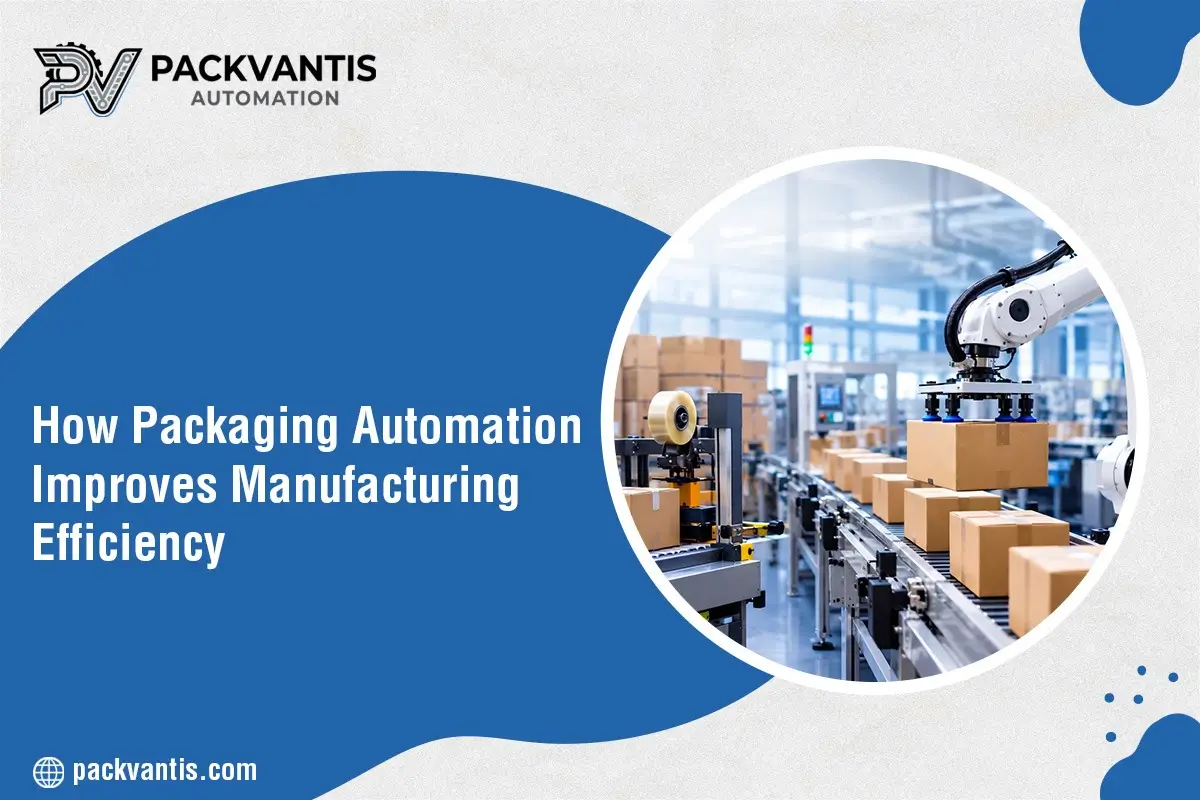
Making the product is only part of the job. After that it has to be packed, and that’s where a lot of plants quietly lose time. Cartons get folded, items get loaded, cases get sealed and stacked, and if people do every bit of it by hand, the packing end becomes the slowest point on the line.
Machines can take most of that repetitive work and run it at a steady pace. If your volumes are going up, you get more output and more even packs, and the line stops stalling right at the finish.
At Packvantis Automation, we build end-of-line packaging systems: carton erection, case packing, case sealing and palletizing.
What We Mean by Packaging Automation
Mostly it means machines doing the packing work that people used to do by hand. Depending on what you make, a line might have a carton erector, a case packer, a case sealer, conveyors and a palletizer. Some plants have all of it, some just one or two machines.
The change is simple. Nobody folds the same carton ten thousand times a day anymore. A machine does it to a set pattern, and packing stops falling behind production.
If you’re shopping for an automatic packaging machine in India, start with your product, the packaging format, how much you pack per shift and how much floor space you have. Those four things narrow the options fast.
It’s Faster, and the Output Looks the Same Every Time
Folding cartons, loading products and sealing cases by hand takes ages when volumes are high. A machine just keeps going at a set speed, so the gap between finishing a product and shipping it gets shorter. A carton erector, for instance, forms the carton and hands it on, so nobody is taping boxes by hand.
The sameness matters as much as the speed. People get tired, fold things their own way and place products slightly differently each time. A machine repeats one movement, so cartons, packs and seals come out alike. That counts when goods have to reach a distributor or customer in good shape.
It also means fewer mistakes. A badly formed carton or a weak seal leads to rework, damaged goods and wasted material. When you pick a packaging machinery supplier, don’t judge on speed alone. Reliability, accuracy, maintenance needs and technical support are worth asking about, and so is how well the machine fits the line you already have.
Less Repetitive Work, Better Use of People
Packing is lifting, bending, folding and sealing, over and over for a whole shift. It’s tiring, and it ties up people who could be doing something more useful.
With automation, operators watch the machine, check packing quality, keep materials stocked and deal with alerts. They aren’t gone from the line. Their time just goes to work that needs judgement. There’s a safety side too, because less lifting and bending means less strain on the people doing it.
Smoother Flow From Production to Dispatch
Packing sits between manufacturing and dispatch. If it can’t keep up, finished goods pile up before they ever reach the warehouse.
An end-of-line system links the carton erector, case packer, case sealer and palletizer into one flow. Less product gets moved by hand, and there’s less waiting between stages.
Easier to Scale
A packing process that works at low volume can fall apart when demand jumps. Hiring more people helps for a while, but it adds labour and makes steady output harder to hold.
Automation scales better. You pick machines for today’s volume and keep an eye on where you’re heading. If you need to form cartons in bulk, an automatic carton erector machine manufacturer in India can help match equipment to your carton sizes, speeds, sealing needs and floor space.
What to Think About Before You Automate
Plan around the whole packing process, not around one machine. Start with how much you pack and how fast it needs to go, then look at product size and weight, carton and case sizes, and how much floor space you have. Check what conveyors and equipment you already own, how much manual work you’re happy to keep, and what maintenance and technical support each machine needs. And think about where production will be in a few years.
The aim is a system that fits your plant. A machine that just creates another bottleneck isn’t worth buying.
Why It’s a Long-Term Investment
Packaging automation isn’t only a machine purchase. If it’s chosen and fitted well, it improves speed, consistency, labour use, handling and workflow all at once.
Packvantis Automation focuses on secondary and end-of-line packaging automation, from carton erection and case packing to sealing and palletizing, and treats packing as part of the wider production process instead of a last step on its own. For a growing manufacturer, that can be the difference between a line that holds up and one that struggles.
Conclusion
Packaging automation helps manufacturers improve packing speed, maintain consistent quality, reduce repetitive manual work and move finished goods more efficiently from production to dispatch. The right combination of machines can also help prevent bottlenecks as production volumes increase.
Depending on your requirements, you can automate individual stages or connect carton erectors, case packing machines, case sealing machines, conveyors and robotic palletizing systems into a coordinated end-of-line packaging system. Choosing equipment that works well together can improve workflow and support future production growth.
Packvantis Automation offers end-of-line packaging automation solutions, from carton erection and case packing to case sealing and palletizing. Contact our team to discuss your production needs and find packaging machinery that fits your products, available space and output targets.